We all know that eating fresh fruit provides your body with
the vitamins and minerals it needs to stay healthy, and pineapple is no
different. Tropical pineapples have lots of important properties that are
essential in keeping you healthy.

Pineapples belonging to the Bromeliaceae family originated
in America, but it was the Europeans who first discovered this tropical fruit
in the 1600's. The cultivation of this plant spread far and wide to all
tropical regions of the world.
This popular fruit is eaten raw or is an important
ingredient in various pies. It is widely used to flavor ice creams and shakes.
Pineapple toppings and puddings are a common dessert in many cultures.
Health
Benefits of Pineapple or Ananas
1.
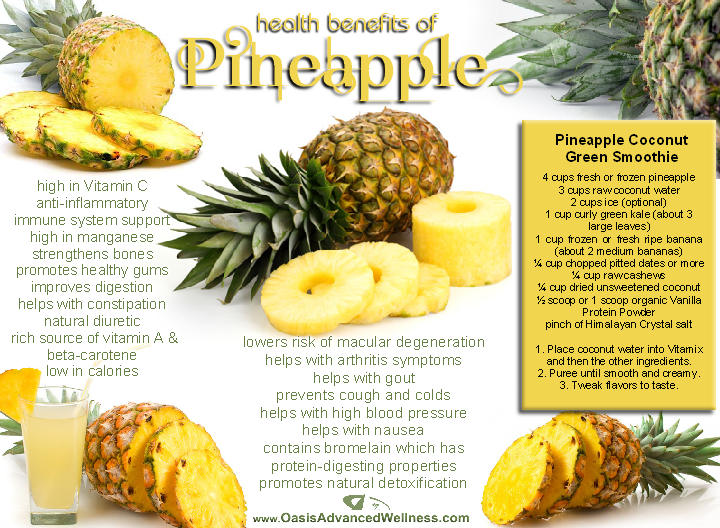
Fresh pineapple is low in calories.
Nonetheless, it is a storehouse of several unique health promoting compounds,
minerals and vitamins that are essential for optimum health.
2. 100 g fruit provides just about 50 calories equivalent to that of
apples. Its flesh contains no saturated fats or cholesterol; however, it is
rich source of soluble and insoluble dietary fiber like pectin.
3.
Pineapple is also known for its high
level of manganese. The Manganese mineral is an essential element for energy
production, while protecting your cells from free radicals. It helps your body
use key nutrients including thiamine and biotin, keeps your bones healthy and
helps synthesis fatty foods.
4. Increasing your daily intake of antioxidants is also great for
boosting your immune system, which means you’ll be able to fight off colds and
flues during winter.
5. Asthma prevention: The risks for developing asthma are lower in
people who consume a high amount of certain nutrients. One of these nutrients
is beta-carotene, found in plant foods like pineapple, mangoes, papaya,
apricots, broccoli, cantaloupe, pumpkin and carrots.
6.
Blood pressure: Increasing potassium
intake by consuming high potassium fruits and vegetables can help with lowering
blood pressure. According to the National Health and Nutrition Examination
Survey, fewer than 2% of US people meet the daily 4700 mg recommendation. Also
of note, a high potassium intake is associated with a 20% decreased risk of
dying from all causes.
7. Fresh pineapple is an excellent source of antioxidant vitamin;
vitamin C. 100 g fruit contains 47.8 or 80% of this vitamin. Vitamin C is
required for the collagen synthesis in the body. Collagen is the main
structural protein in the body required for maintaining the integrity of blood
vessels, skin, organs, and bones. Regular consumption of foods rich in vitamin
C helps the body protect from scurvy; develop resistance against infectious
agents (boosts immunity) and scavenge harmful, pro-inflammatory free radicals
from the body.
8. Drinking a glass of pineapple juice regularly helps to prevent
mucous accumulation in the throat. It brings out the mucous during a productive
cough and clears the lungs because of its high vitamin C content.

9.
Adding on to the benefits is the
ability to get a healthy oral cavity. Pineapples are acidic in nature; this
helps them to prevent any bacterial growth in the mouth thus discouraging
plaque growth in the buccal mucosa (the mucous membranes lining the inside of
the mouth).
10. Digestion: Pineapples, because of their fiber and water content,
help to prevent constipation and promote regularity and a healthy digestive
tract.
11. Skin: The antioxidant vitamin C, when eaten in its natural form
(as in a pineapple) or applied topically, can help to fight skin damage caused
by the sun and pollution, reduce wrinkles and improve overall skin texture.
Vitamin C also plays a vital role in the formation of collagen, the support system
of your skin.
Comments
Post a Comment