Being a little underweight is not necessarily
a problem. If you're a woman who needs to gain weight, odds are, you're used to
people enviously telling you something along the lines of, “I wish I had your
problem.” For many underweight women, though, gaining weight is just as
difficult as losing weight proves for most others. If you need to gain weight
fast, here are a few pieces of advice on how you can do so in the healthiest
manner possible.

Consume
an additional 500 calories per day. An extra 500 calories per day is
enough to help you gain weight, but should not leave you feeling sluggish,
bloated or sick. Just by
gaining an extra 500 calories a day (which is pretty easy if you follow the
instructions below) you can aim to gain between 1lb and 1.5 lbs per week. However,
it is important to be aware that these extra 500 calories should be gained in a
healthy way, by eating more calorie-rich foods that are still packed with
vitamins in nutrients. Gaining weight by eating more junk food is not a good
idea, as it will leave you feeling unwell and sapped of energy, and could lead
to further health problems down the line. You should always consult with your
doctor or nutritionist before embarking on a weight gain
plan.
Eat more protein. Protein-rich
foods are your best friend when you're trying to gain weight healthily. They
help to build lean muscles, rather than adding much fat. Eating protein is
particularly important if you plan on doing strength gaining exercises. Good
sources of protein include lean meat, fish and poultry, in addition to eggs,
whole grains, dairy products and legumes. You should aim to eat about 5oz of
protein per day, from a combination of these sources. You can also increase
your protein intake by drinking protein shakes, or adding a protein supplement
to juices and smoothies.
Eat and drink frequently. If you want to gain weight quickly, you should eat a total of six times a day. Eat breakfast, lunch, and dinner, and enjoy a snack after each meal. As a general rule, do not let more than four waking hours pass without eating. Your three main meals should be fairly substantial. Do not decrease your portion size during these meals. Three or more of your meals and snacks should contain a protein, starch, vegetable, and fat. As long as you do not decrease the amount you eat during your main meals, adding snacks in between meals is a good way to pack more calories into your day.
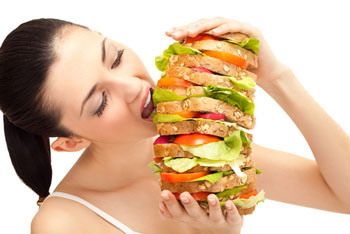
Eat
quick. When you eat slow, you give your body
the chance to digest your food as you eat, which results in feeling fuller
faster. If you eat quickly, you can eat more food before your body has the
chance to feel full, making it easier to consume more.
Research
high-calorie and nutrient-dense foods. Within every food group, there
are certain foods that are nutritionally healthy yet high in calories. Opt for
these options rather than low-calorie foods from the same food group. In the grains
group, eat heavy breads like whole wheat and pumpernickel and dense cereals
with granola. Bran muffins, bagels, and wheat germ are also good choices. In
the fruit group, consider eating more bananas, pineapples, raisins, dried
fruit, and avocados. In general, starchy fruits are preferable to water-rich
fruits.For vegetables, try peas, corn, potatoes, and winter squash. As with
fruit, starchy vegetables are better than water-rich vegetables. Within the
dairy group, consider cheese, ice cream, frozen yogurt, and whole milk. For
proteins, consider eating nut butters, nuts, seeds, and hummus.
Cook
with oil and butter. Cooking foods in oil and butter will increase a dish's
total number of calories. Note that some fats are healthier than others, and
you should still gravitate toward fats that are better for you rather than
those that contain almost no nutritional benefit, like lard. Good fats to
cook with include: Olive oil, which contains 119 calories per 1 Tbsp (15 ml). Canola
oil, which contains 120 calories per 1 Tbsp (15 ml). Butter, which contains 102
calories per 1 Tbsp (15 ml).
Eat more
snacks. Try to incorporate more snacks into your daily routine,
as these can be a great way of adding calories without having to eat too much. Grab a handful
of nuts while you're watching TV, eat a banana on your way to work, or spread
some hummus on wholegrain crackers while you're waiting for dinner.

Gain
muscle mass. It's a good idea to continue to
exercise while you attempt to gain weight the healthy way. However, it's
probably best to lay off the cardio (which burns those hard-earned calories)
and focus on strength training instead (which builds muscle mass and helps you
to gain weight).
Quit
smoking. Smoking is a bad idea for those who are trying to gain
weight as it suppresses the appetite. Although it won't be easy, quitting is the healthiest
option - not only will it increase your appetite but it will improve your
overall appearance, not to mention the health of your lungs. If quitting seems
too extreme, at least avoid smoking for an hour or two before meals.
Stay
committed. Gaining weight is not an easy process - in fact,
gaining weight can be much harder than losing it. However, it is important that
you stay committed and keep your eyes on the prize. Set small,
manageable goals for yourself - like aiming to gain 4 pounds in a month. This
will give you something more tangible to work towards. If you set your goals
too high, it's easy to become overwhelmed and feel like giving up.
Stay
healthy. The most important thing through the entire weight gain
process is to stay healthy - eating a balanced diet and continuing to exercise
throughout. Bingeing
on junk food many seem like the easier option, but your overall health will
suffer and you will not be able to maintain the weight in the long run. Remember
than you're not just trying to gain weight - you're trying to overhaul your
entire attitude towards food.
Nice tips. I like it. Thank you so much for sharing.
ReplyDeleteCatering Services in Nanganallur